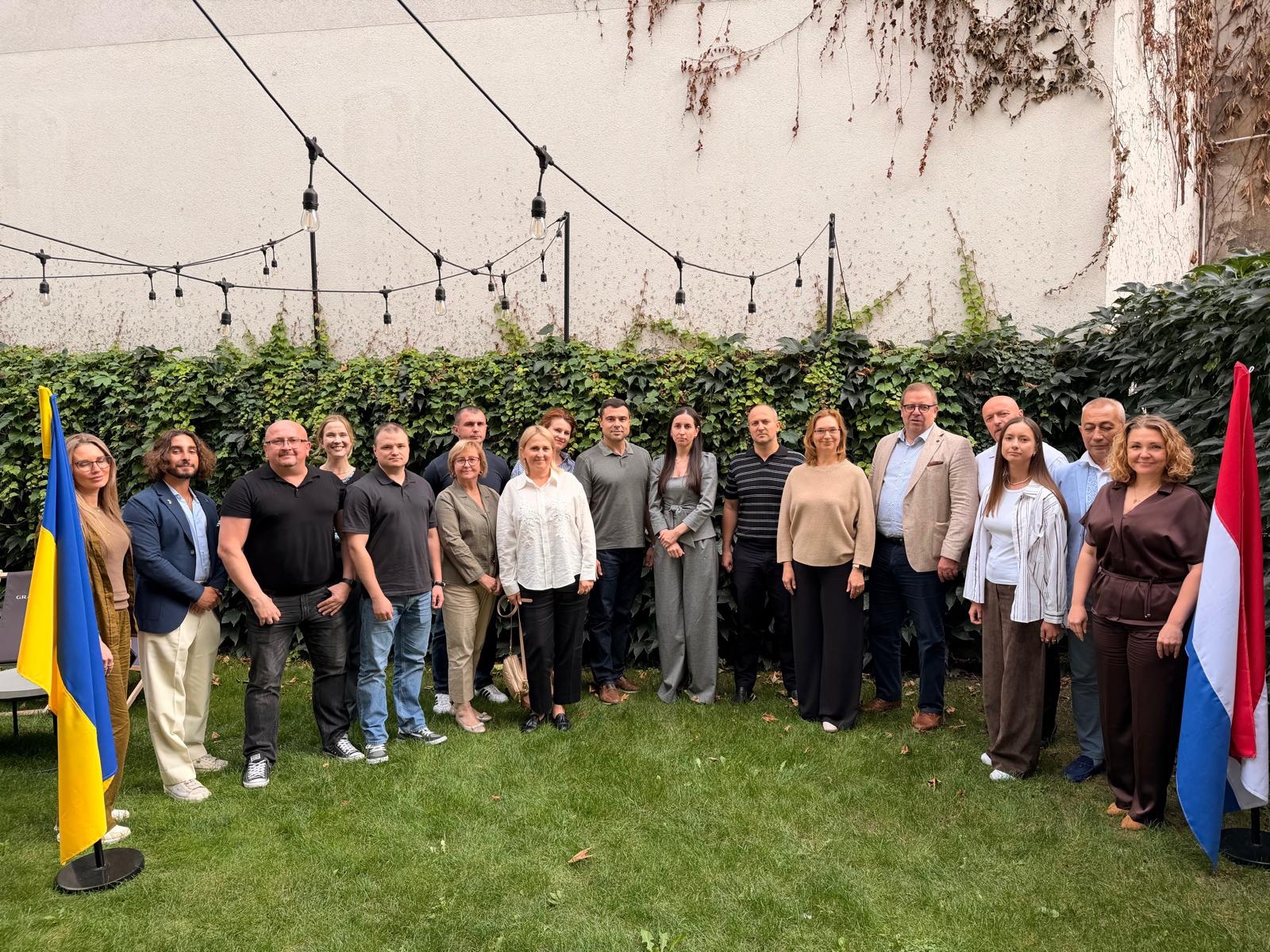
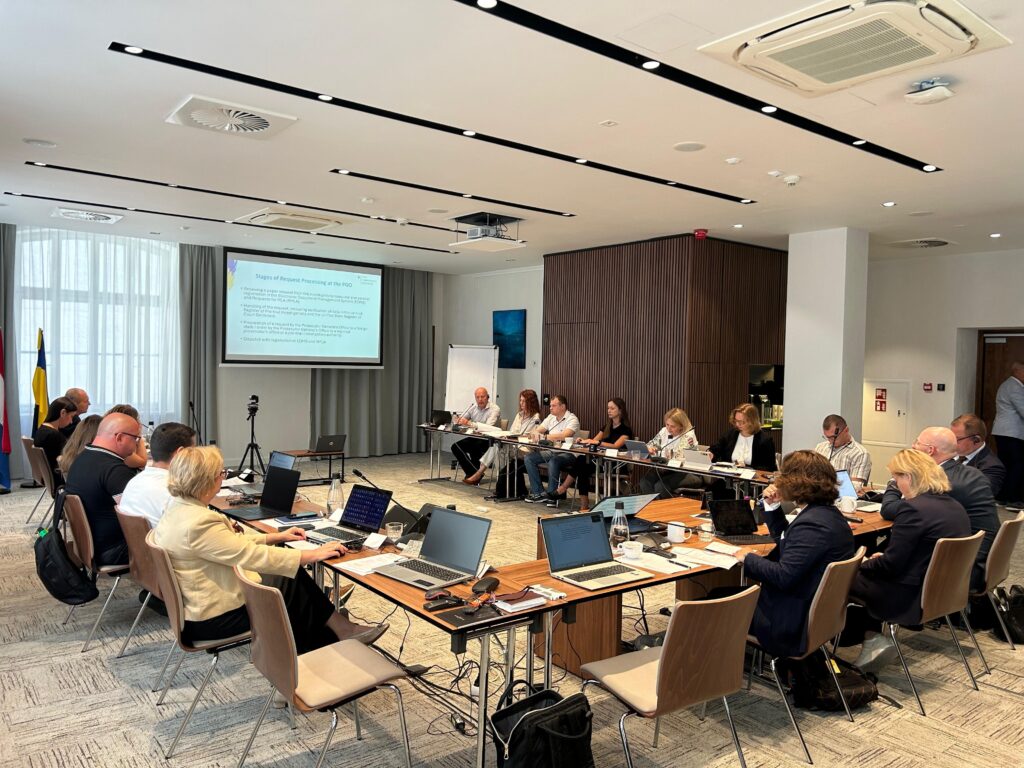
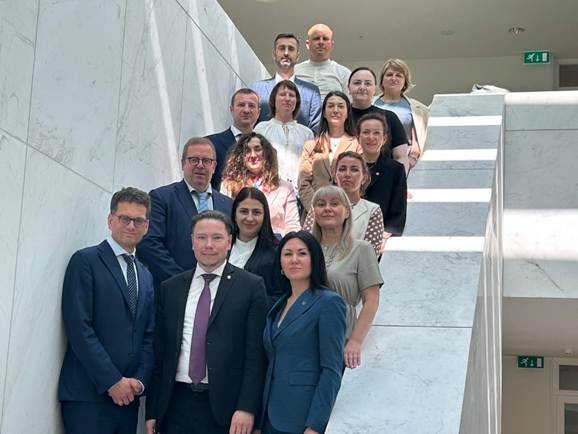
On 2 and 3 September 2026, thirteen Ukrainian practitioners met with Dutch counterparts in Krakow for a two-day roundtable on international judicial cooperation in practice. The roundtable was organised and implemented by the Center for International Legal Cooperation (CILC) as part of Accountability II, a programme funded by the Netherlands Ministry of Foreign Affairs and implemented by IDLO, the T.M.C. Asser Institute, CILC, and the Netherlands Helsinki Committee in support of a fair, transparent and accountable criminal justice system in Ukraine. The activity forms part of the workstream on mutual legal assistance and international judicial cooperation.
The Ukrainian delegation covered the full chain of institutions that handle cooperation with foreign authorities: the Ministry of Justice, the Cassation Criminal Court within the Supreme Court, the Prosecutor General’s Office, the National Anti-Corruption Bureau, the National Police, the Security Service of Ukraine, the State Bureau of Investigations, the Economic Security Bureau, the National School of Judges, the Prosecutor’s Training Centre, and the Centre for Judicial Studies. They were joined by senior Dutch practitioners with long experience of cross-border cooperation in criminal matters, together with CILC Director Eric Vincken and the project team, Domenico Foti and Laura Henny.
Much of the discussion turned on a question that sounds administrative and shapes everything that follows: what happens to a request for legal assistance once it arrives. The Dutch speakers described how the Netherlands registers, routes, and tracks such requests, who is allowed to see what, and why institutional ownership of a system matters less than the rules governing access to it. Ukrainian participants set out their own landscape, including the new EXILA system now entering operation at the Prosecutor General’s Office and the eCase system used by the National Anti-Corruption Bureau, and were frank about the bottlenecks that remain. Eric Vincken shared CILC’s experience of developing case management systems in Montenegro and the wider Western Balkans, where the lesson has been that workable solutions need not be expensive ones.
Participants then began to design a system of their own. Working in groups, they set out the functions it would need, who should own it, how access should be governed, and how it should connect to the tools their institutions already use. One group took the exercise further than anyone had asked and returned the following morning with a working online demonstration built overnight, complete with deadline tracking, role-based access and templates that a practitioner could complete on screen.
The second half of the roundtable moved to the European Investigation Order, the instrument Ukraine will use in place of traditional mutual legal assistance once it joins the European Union. After a walkthrough of the standard form, the groups completed it for a sample case, noting each unclear field and terminology question as it arose. Several participants remarked that the form was more straightforward than they had expected, and in many respects simpler than the requests they draft today. The harder part, as the discussion made clear, is not the paperwork but the shift in thinking behind it, from asking another state for help to issuing a decision that another authority is bound to recognise.
That shift takes practice, and practice is what these two days were for. Bringing practitioners around one table to discuss issues and share knowledge remains one of the most effective forms of cooperation, and as such, it forms the foundation of CILC’s work around the world.
3 high level trainings programmes delivered on Administration of Justice, Legislation, and Communicating with the Public;
Approximately 75 judges and legal and communication professionals from 9 countries in the Middle East and
ICMPD has published an In Focus feature on the Joint Team and the IAMROC project, looking at the investigation and prosecution work behind a major migrant smuggling conviction in the Netherlands earlier this year.
The Center for International Legal Cooperation welcomed to The Hague a delegation from the Republic of Moldova, comprised of members of the Moldovan Superior Council of Magistracy and the Superior Council of Prosecutors.
 CILC news, Project updates
  CILC news, Project updates